
Listen to this article:
Matthew McDonald’s unexpected technology career began 12 years ago on the cliffs of northern Virginia. Matt was a dedicated rock-climbing instructor back then, and while he enjoyed it immensely, he felt he had reached the point where he needed to “find a real job”, one that could offer greater opportunities for career advancement and fulfillment. That desire for change led him to enroll at George Mason University, where after an interest in civil engineering (and a brief stint as a belly dancing star), he settled on pursuing a cybersecurity major.
While that decision eventually launched his rise to ECS’ Vice President of Defense, Intel and Health, Matt credits his time on the cliffs for developing vital life skills. It taught him how to be a good communicator, how to work with people, and how to stretch them in ways that were challenging, but not overbearing. Those skills would be the hallmark of his ECS career.

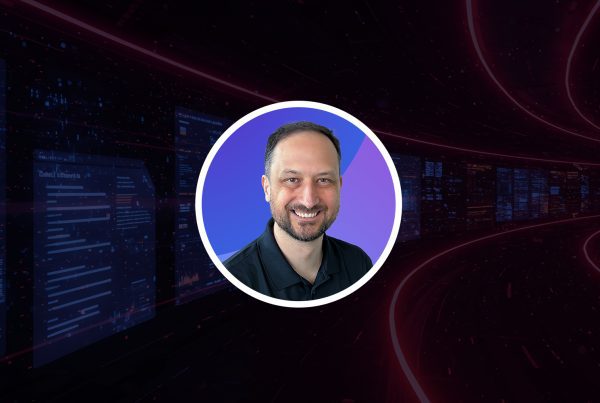
MATT MCDONALD
VP of Defense, Intel and Health
Building an IT Career
After finishing his second year of undergraduate studies, Matt initially had an internship lined up as a cybersecurity intern. However, after hearing good things about ECS from his professor (who worked for the organization at the time), Matt decided to explore a different opportunity.
“I came in on a Tuesday dressed in a suit and tie, fully expecting an hour-long intensive interview,” recalled Matt. “And the team basically asked if I had any questions for them. I was completely taken aback.”
However, he had been “taken aback” in a way that sparked his curiosity. After the unconventional interview, Matt reached out to his father to sort out his feelings. While he had some reservations, on his father’s counsel, he decided to follow his instincts and pursue his interest in ECS’ unique down-to-earth culture. He began his ECS career by interning on the SUNet (the DoD’s Secure Unclassified Network) team, an experience he credits for further refining his technical skills.

“Leadership was open to me bugging them on a regular basis, asking, ‘Hey, can I learn this?’” Matt explained. “That was a stepping stone for me to just be a sponge and continue to learn.”
Matt’s career took off from there, first with him taking over a portion of the network engineering team and then later moving into a technical lead role over special projects. Helping build teams to tackle challenges and develop customized solutions, Matt was appointed the lead on a number of notable projects, including:
- Leveraging AI models to locate bad actors within large amounts of social media data as part of the Maven program.
- Deploying COVID-19 predictive analytics to support everything from disease modeling and predicting when certain countries were going to run out of vital supplies to deciding where PPE and medical transportation should be redistributed as part of Project Salus.
- Delivering mission partner environments (MPE), including helping establish a secure, cloud-based environment for multinational coordination, as well as multiple environments supporting an undersea deterrence modernization initiative.
Redefining the Tech Role for Customer Relationships
When pointing to a specific turning point in his career, Matt mentions how the pursuit of a potential customer led to major changes in the organization’s approach. During the capture process, Matt was informed by the project manager that technical personnel traditionally did not attend onboarding engagements. Seeing an opportunity, Matt inquired if he could attend.
“If I am not valuable in the meeting, you don’t have to bring me to any other meetings,” Matthew said to the project manager.
In the end, the trip was so successful that the project manager stated he would never go to another meeting without a technical person. From then on, technical personnel were tasked with driving these conversations and building in-depth customer relationships to ensure ECS delivered upon the customer’s vision.


Tips for an Expansive Technology Career
When discussing what people can learn from his experience, Matt narrows his focus to two main areas: relationship building and staying hungry. He credits the first for his career growth and encourages people not to be afraid to ask questions and to seek out mentors.
“Don’t be afraid to fail and try to find those leaders within the organization who you can learn from,” Matt emphasized.
The second ingredient, hunger, has not only served Matt well, but is something he sees in the next generation of leaders at ECS. To Matt, staying relevant in a technical field is a 24/7 job and requires people to want to excel and stay current on the latest trends and technologies.
“The people who do stay relevant are the ones who are hungry. They want to learn,” Matt says. “That’s a huge quality we’ve seen in many of our leaders. Those are the ones that succeed.”